

The purpose of Factory Acceptance Testing (FAT) is to demonstrate the hardware quality, system configuration, and specification...

What Is SCADA System Factory Acceptance Testing (FAT) and Why Is It Important?
read more
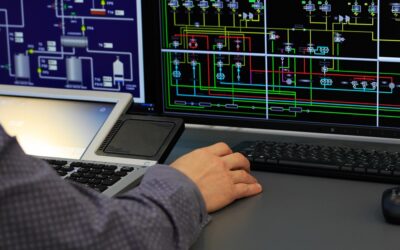
The purpose of Factory Acceptance Testing (FAT) is to demonstrate the hardware quality, system configuration, and specification...

Retrofitting is the process of modifying or replacing an existing SCADA system within a solar PV plant to fit the new or changing...
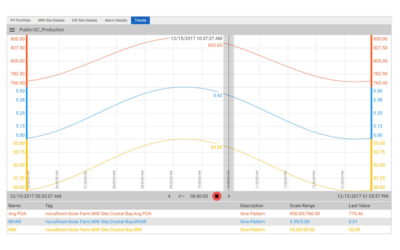
Site capacity is one of the major factors that drives the total cost of a SCADA system for a solar or energy storage project....
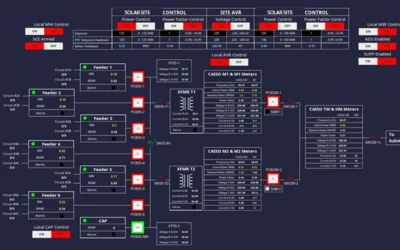
At a solar PV plant, the historian is responsible for storing and logging the data that the SCADA system aggregates. It allows...

Many solar PV asset owners have wide and disparate portfolios, often due to rapid-growth mergers and acquisitions (M&A). As a...

We've spent several blogs on how the SCADA system interacts with the different field devices at a solar PV site, including the...

Solar tracker systems are an advanced technology for mounting PV panels. They use motors to automatically move the panels to follow...
A Human Machine Interface (HMI) is a user interface that allows a person to interact with a system, machine or device. In simpler...
A Power Plant Controller (PPC) is used to control and regulate the networked inverters, devices and equipment at a solar PV plant in...

When you're trying to determine which SCADA provider to work with for your solar PV project, it's important to make sure that you're...